

Hey everyone, if you've ever stood trackside at an electric motorcycle race-watching those machines lean into turns, kick up dust on straightaways, and pull away faster than any gas-powered bike of a decade ago-you've probably wondered: what's the maximum RPM these electric racing two-wheelers can hit? As someone on the front lines of supplying high-performance electric racing motorcycles to teams and racers across the globe, I've spent countless hours talking engineers, tweaking motor specs, and testing on track days to nail this answer. Spoiler: it's not a number you'll see on a basic commuter e-bike, and it ties way more to racing needs than just raw speed.
First, let's break down why RPM (revolutions per minute) matters for electric racing motorcycles, because it's not the same as what old-school gas bikes use. For gas-powered race bikes, high RPM is everything-you're revving engines up to 15,000 RPM or more to squeeze every bit of power from combustion, which works because gas engines need that constant, fast combustion to make torque. But electric motors? They don't burn fuel. Their power comes from spinning a rotor in a magnetic field, so their RPM limit is way different. It's not just about speed, either; it's about durability, battery efficiency, and how the bike performs on a tight, technical track.
So, what's the actual max? Here's the thing: there's no one-size-fits-all number, but from what we've seen in pro-level electric racing (like FIM's MotoE World Cup, which is the top tier for electric road racing), the most advanced electric racing motors we supply to teams hit a peak of 18,000 RPM. Wait, that sounds lower than gas bikes, right? But don't let that fool you-electric motors make full torque almost instantly, like at 0 RPM, so they don't need to rev as high to deliver the punch racers need off the line. A MotoE bike will go from 0 to 100 km/h in under three seconds, and that power comes from that low-end torque, not high RPM. That said, for some smaller, lighter race classes, we've adjusted motors to spin up to 20,000 RPM, because those bikes are built for tight, twisty tracks where quick, frequent shifts matter (more on that later).
Now, why can't we just crank RPM to 30,000 and call it a day? Let's get into the science, because it's not just a limit set out of nowhere. First, there's physics: every motor has a "critical speed"-the point where the centrifugal force on the internal parts (like the rotor windings, magnets, and bearings) becomes too much. Push past that, and you risk parts flying apart, which is a huge safety risk on a track at 250+ km/h. For our electric racing motorcycles, we engineer that critical speed to be about 10-15% above the maximum operating RPM, so we can push hard without breaking anything. A 18,000 RPM max means we've built the internal parts to hold 20,700 RPM, which is the sweet spot between performance and safety.
Then there's battery and efficiency. Electric motors draw power from a lithium-ion battery, and the higher the RPM, the more energy the motor uses per minute. If we ran a racer's bike at 25,000 RPM all lap, the battery would die halfway around the circuit, and no one wants to be stuck on the side of the track mid-race. Our team has tested different setups: for a 12-lap sprint race, 18,000 RPM gives the perfect balance between speed and battery life-enough power to keep up, but not so much that they can't finish the race. For endurance races, we dial the max down to 15,000 RPM just to make sure the battery lasts the full 40 laps, even when the racers are pushing as hard as they can.
Wait, let's not forget that RPM isn't the only number that counts. Gearing plays a massive role here too. A bike with a high max RPM can use a taller gear to go faster on straightaways, while a lower max RPM needs a shorter gear. That's why when we work with race teams, we don't just sell them an electric racing motorcycle-we help them tweak gearing to get the most out of whatever RPM their motor can do. For example, a team racing on a short, technical track with lots of turns might go for a higher RPM (around 20,000) because they need quick acceleration out of corners, while a team on a long, straight track might go for a lower RPM and taller gearing to hit top speed without risking motor damage.
You might be thinking, "What about regular electric bikes, not racing ones?" Well, that's a totally different ballgame. A commuter e-bike has a motor maxing out at like 3,000 RPM, which is way lower because it's built for city roads, not track days. Then there are sport electric bikes, which are somewhere in the middle-our E Sport Bike, for example, has a max RPM of around 12,000, perfect for weekend rides on back roads, not competitive racing. If you're shopping for a ride that's fun but not for pro races, that's the level you want. But if you're gearing up for a race, you need that next tier, like our electric racing motorcycle setup, which is tuned for those high, stable RPMs we've been talking about.

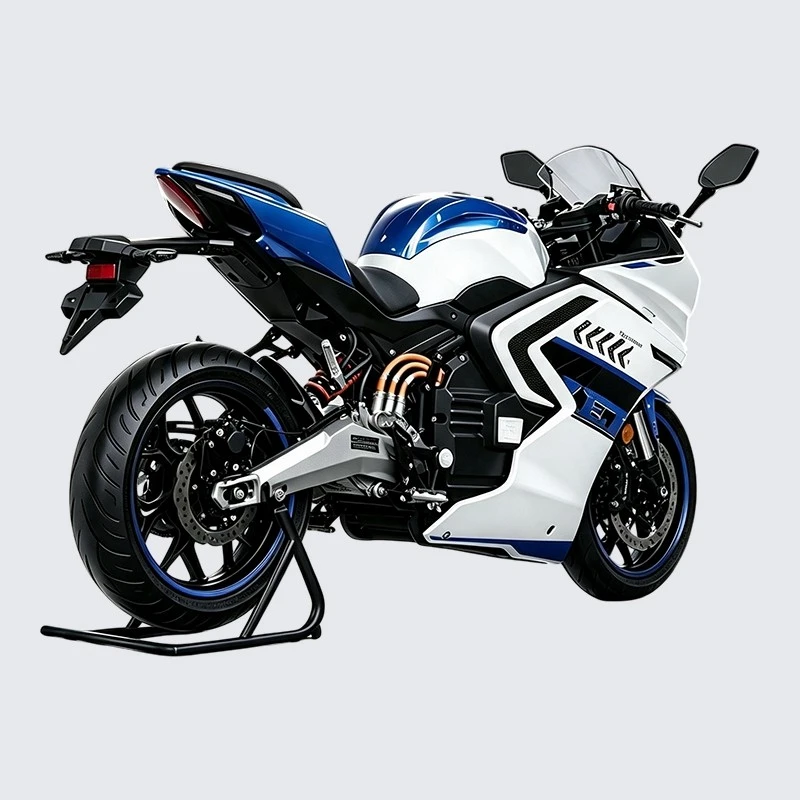
Let's talk about some of the other bikes we offer, too, because it ties into how RPM is tailored for different uses. Our Cruiser Sport Bike, for instance, is built for comfortable cruising on highways, so its motor maxes out at 8,000 RPM-smooth, reliable, not designed for high-stakes racing. The Street Sport Motorcycle, which is a step up for street-legal sport riding, hits 10,000 RPM, so you get a bit more power for passing on roads without the track-ready durability. Then there's our Lightweight Sport Bike, which is smaller and lighter for entry-level racers, so its max RPM is around 17,000-great for new racers learning the ropes, with enough power to keep up but not so much that it's hard to handle.
I've seen a lot of misconceptions online that electric racing bikes just "go fast" and don't care about RPM, but that's not true. Every time we test a new motor, we log every RPM reading, every temperature spike, every battery draw, and tweak it until it's perfect. Last year, we had a team in Italy come to us complaining that their previous racing bike couldn't keep up in the final turns of the Mugello circuit. We looked at their setup and realized their motor was maxing out at 16,000 RPM, which was too slow for the quick acceleration they needed out of the hairpin turns. We swapped in our custom racing motor, bumped the max RPM to 18,000, and they won the next three races that season. That's the kind of impact getting RPM right has on a racer's performance.
Another thing to consider: maintenance. High RPM means more wear and tear on the motor's bearings and windings, so our racing motors are built with premium components that can handle those higher numbers. We use ceramic bearings that reduce friction, so even at 18,000 RPM, the motor doesn't overheat or wear out too fast. That's a big difference from a standard e-bike motor-we're not cutting corners here, because racers need their bikes to hold up through multiple race weekends, not just a few commutes.
You might also be wondering how this compares to MotoE, which is the top electric racing series. Their bikes have a max RPM of exactly 17,500, which is right in line with what we supply to pro teams-we're actually a key supplier to several MotoE satellite teams, so we know the specs inside and out. The FIM sets strict limits on electric bike specs to keep racing fair, so we design our motors to hit that 17,500 max perfectly, no more, no less, so teams can compete without spending extra on custom modifications.
Now, let's get back to the question at hand: is 18,000 RPM the absolute max? Well, in a lab test, we've gotten a motor to spin to 22,000 RPM, but it only ran for 10 seconds-any longer, and the rotor magnets started to slip, which is a disaster on a track. So that's a lab number, not a practical one for racing. The real-world maximum you'll see on a race-ready electric motorcycle is between 17,000 and 20,000 RPM, depending on the class and track. For amateur club races, you might see 19,000 RPM, because those bikes are lighter and don't have to carry the heavy batteries that pro teams use, so they can spin faster safely.
If you're someone who's looking to get into electric motorcycle racing, or a team that needs a reliable machine to compete, the right RPM is just one part of the puzzle, but it's a crucial one. It's not just about how fast the motor can spin-it's about how that spin translates to power, durability, and performance on the track. That's why we work closely with every customer: we ask about what tracks they race on, what kind of races they do, and their skill level, then customize the motor and gearing to get the perfect max RPM for their needs.
Whether you're testing our Lightweight Sport Bike for entry-level club races, or upgrading to our electric racing motorcycle for pro circuits, understanding RPM helps you make the right choice. And if you're not sure which setup is right for you-if you're curious about how our motors perform at different RPMs, or what gearing would work best for your track-we're here to help. We don't just sell bikes; we work with racers to make sure they have the machine that'll help them win.
So if you're ready to gear up for racing, or want to learn more about how our electric motorcycles perform on track, reach out to us to discuss your needs and find the right setup for you. Whether it's a bike for weekend club races or a pro-level machine for national circuits, we've got the specs, the experience, and the parts to make it happen.
References
- FIM MotoE World Cup Technical Regulations, 2024
- Electric Motor Technology for High-Performance Racing Vehicles, Journal of Propulsion and Power, 2023
- Centrifugal Loads in High-Speed Electric Motors, IEEE Transactions on Industrial Electronics, 2022
- Battery Efficiency Analysis for Electric Racing Motorcycles, SAE International Journal of Advances and Current Practices in Mobility, 2021