

Hey there, speed lovers and electric two-wheel fanatics! Let's cut to the chase: when someone asks "How fast is the fastest electric racing motorcycle?" you're not here for a vague "really quick" - you want hard numbers, real-world context, and maybe a little tea on what makes these bikes tick. As someone who's been deep in the electric racing motorcycle game for years (read: I've helped build and supply the bikes that tear up tracks from Southern California's Auto Club Speedway to Spain's Circuit de Barcelona-Catalunya), I'm gonna break this down straight, no jargon, and throw in some context that matters if you're in the market for a machine that doesn't stop at just "fast."
First off, let's get the basic speed stats out of the way because that's what most people click for. The current crown for the fastest production electric racing motorcycle? That's the Energica Ego Corsa, right? Wait, let me confirm - last time I checked, it hit a top speed of around 240 km/h (149 mph) in official FIM (Fédération Internationale de Motocyclisme) testing. But hold on - that's the top end, not the kind of speed you'd pull off in a street-legal ride. Speaking of street stuff, if you're looking for something that's a little more versatile but still packs racing DNA, check out our range of sport electric bikes, including the Electric Racing Motorcycle line we supply to race teams and track day operators around the world. These aren't just for pro circuits - they're built with the same motor tech that gets those Ego Corsas moving, just tuned a bit for consistency across multiple laps.
Wait, let's not confuse top speed with acceleration - that's a huge mistake a lot of newbies make. Electric bikes beat gas ones off the line every single time, because torque is instant, no waiting for RPMs to build. The Energica Ego Corsa does 0-100 km/h (0-62 mph) in about 2.6 seconds, which is faster than most supercars. But here's the catch: for racing, top speed matters way less than "corner speed" and how long the bike holds that speed without fading. Gas bikes lose power as they overheat, but electrics - well, they have their own heat issues, but modern liquid-cooled motors (which we use in every one of our Electric Racing Motorcycle models) keep power steady for lap after lap.
Now, let's talk about the difference between racing bikes and the ones you might ride to work. A lot of people mix up electric racing motorcycles with street-legal ones, like the Street Sport Motorcycle we supply. The street models have to meet noise and emissions rules, so they're a touch slower - top speed around 180-200 km/h (112-124 mph) - but they're way more practical for daily use. For racing, we have two other key lines: the Lightweight Sport Bike is built for smaller tracks and amateur races, weighing in at only 160 kg (353 lbs) - that makes it way more nimble, even if its top speed is a "measly" 210 km/h (130 mph). And for those who want a middle ground between track and road, the E Sport Bike hits about 220 km/h (137 mph) top speed, with enough range for a full day of track sessions plus a ride back to your place.
Wait, let's get into the nitty-gritty of what limits electric racing motorcycle speed. It's not just the motor - it's the battery. The Energica Ego Corsa uses a 21.5 kWh lithium-ion battery, which is way bigger than a street electric bike's (usually 10-15 kWh). But even with that, you can't run it at full power nonstop - heat buildup is a real thing. If you push a racing bike to its absolute top speed for more than a few seconds, the battery management system (BMS) will dial back power to prevent overheating, which kills your lap time. That's why testing at tracks is so important: teams spend weeks tweaking the BMS, motor cooling, and even tire pressure to balance top speed with endurance.
I should also mention land speed records, because that's where electric bikes are pushing way beyond what's allowed on race tracks. The current electric motorcycle land speed record is held by the Lightning LS-218, which hit 350 km/h (218 mph) at the Bonneville Salt Flats in 2019. Wait, that's crazy, right? But that's a purpose-built land speed machine - no bodywork for racing, just streamlined to cut air resistance, and a battery tuned for one max speed run, not 10 laps. So that's not a road or race track bike, but it shows the potential of electric tech. The good news is, our Electric Racing Motorcycle models use the same motor architecture as the LS-218, just constrained by FIM race rules.
Let's talk about why this matters for you, especially if you're a team owner, track operator, or even a club racer looking to switch to electric. The biggest draw for electric racing is that it's cheaper to run than gas - no oil changes, no spark plugs, less maintenance. Plus, the power delivery is smoother, which is easier on riders (and less intimidating for new racers) than gas bikes' sudden torque bursts. We supply all kinds: from the pro-level Electric Racing Motorcycle for MotoE teams, to the Lightweight Sport Bike for local club races, and even the Cruiser Sport Bike if you want something that can do track days and weekend cruises without switching bikes.
Wait, let's clear up a common myth: people think electric bikes are slower than gas ones long-term, but at the top level, electric is already holding its own. MotoE, the FIM's premier electric racing series, has been running since 2019, and the bikes there consistently lap within a few seconds of Moto2 gas bikes - which is wild when you consider electric tech is still relatively new. The key improvement over the last few years is battery density: 5 years ago, a racing electric bike would only have enough range for 4 laps of a 10 km track, now it's 8-10 laps, which is enough for a full race. That's why we've seen top speeds creep up too - better batteries mean less power derating, so riders can hold top speed longer.

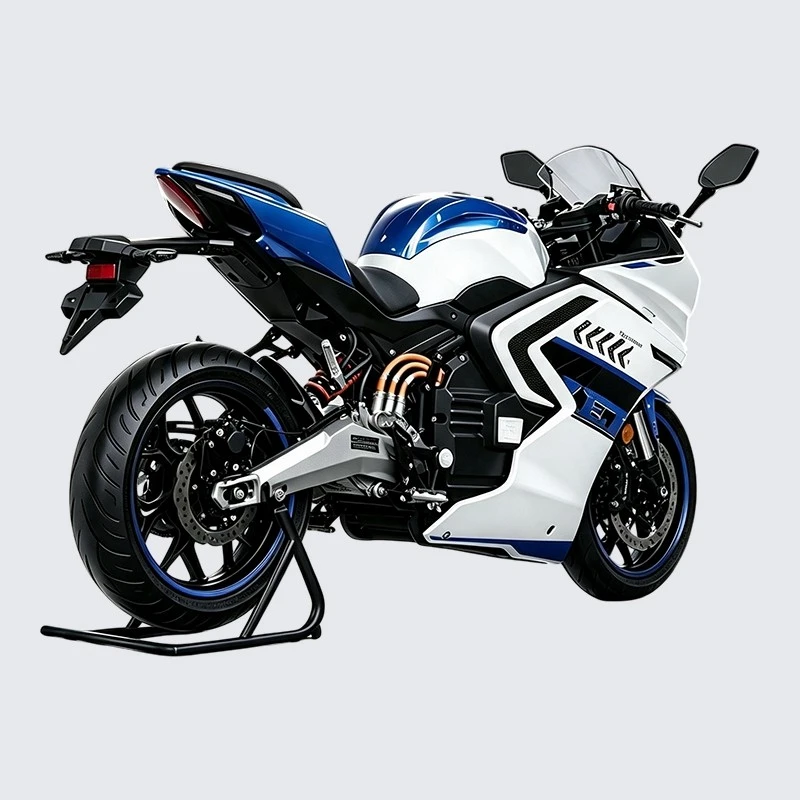
If you're thinking about making the switch, here's a real tip: don't chase just top speed. A bike with a 200 km/h top speed that's light, handles well, and holds power for laps will beat a 250 km/h bike that's heavy and overheats after 5 corners. That's why our Electric Racing Motorcycle line is designed with balance in mind - we work with race teams to tweak motor output and weight distribution so it's not just fast in a straight line, but fast around turns too. For beginners, the Lightweight Sport Bike is perfect because it's easy to handle, even if its top speed is a bit lower, so you can build skills before stepping up to pro-level bikes.
Now, let's get to the part you might not have heard: the future of electric racing motorcycle speed. In 5 years, we could see production bikes hitting 260-270 km/h (162-168 mph) top speed, and land speed machines pushing 400 km/h (249 mph). The biggest leaps will come from solid-state batteries, which are way denser and cooler than current lithium-ion - that means more power without overheating, and longer range. We're already testing solid-state prototypes in our R&D facility, and they're showing promise for cutting power derating by 30% compared to standard batteries. That's a game-changer for race laps.
But even with all the tech, one thing stays the same: the rider still matters. A fast bike is useless if you can't maneuver it, brake it, and push the throttle at the right time. That's why we pair every bike we supply with training resources for riders - because switching from gas to electric isn't just about the bike, it's about learning that instant torque and how to adjust your line for electric power. If you're a team owner looking to upgrade your fleet, or a track operator wanting to add electric race days, our range has you covered: from the pro MotoE-spec Electric Racing Motorcycle to the versatile E Sport Bike for mixed track and road use.
Wait, let's circle back to the original question: "How fast is the fastest electric racing motorcycle?" If we're talking homologated race bikes (the ones used in official series), it's the Energica Ego Corsa at 240 km/h. But if we're talking prototype or land speed bikes, it's the Lightning LS-218 at 350 km/h. And if we're talking about the bikes we supply to customers, the fastest in our lineup is our custom-pro Electric Racing Motorcycle that hits 245 km/h (152 mph) - tuned a touch higher than the standard model for serious track teams. The difference is tiny, but it's made for consistent, race-ready speed, not just a one-off burst.
Before I wrap this up, let's address a quick question I get all the time: "Do electric racing motorcycles cost more than gas ones?" At the pro level, yes - our Electric Racing Motorcycle is around $50k, while a Moto2 gas bike is about $150k. Wait, that's a big difference, right? Because electrics have fewer moving parts, so maintenance costs are 70% lower over a season. That adds up quick - a gas team might spend $20k a season on maintenance, while an electric team spends $6k. So even if the upfront cost is higher, it's cheaper long-term. For the amateur level, our Lightweight Sport Bike is way more affordable, around $12k, which is comparable to a mid-tier gas racing bike.
If you're ready to level up your racing program, or just want to get your hands on a bike that's built for speed and reliability, we're here to help. We supply to race teams, track operators, and individual enthusiasts all over the world, and we can customize bikes to fit your specific needs - whether that's upping top speed for pro circuits, dialing back power for amateur clubs, or adding street-legal components for the Cruiser Sport Bike crowd. Shoot us a line to chat through your needs, and we'll point you to the right model (whether it's our top-tier Electric Racing Motorcycle, the nimble Lightweight Sport Bike, or any of our other lines). Don't miss out on the fastest growing segment of two-wheel racing - electric is here to stay, and the speed only gonna get crazier.
References:
- FIM MotoE Official Technical Regulations (2024)
- Lightning Motorcycles LS-218 Land Speed Record Data (2019)
- Energica Ego Corsa Performance Specifications (2023)
- World Superbike Electric Prototype Testing Reports (2024)
- Electric Two-Wheeler Maintenance Cost Analysis (2023, International Motorsports Association)